
When the Tianzhou-10 robotic cargo spacecraft docked with China’s Tiangong Space Station on May 11, it successfully delivered the world’s first lightweight, high-resolution, high-precision synergistic observatory for carbon dioxide (CO₂) and methane (CH₄) emission point sources. This scientific breakthrough was led by Prof. SU Hui, Chair Professor of the Department of Civil and Environmental Engineering and Global STEM Professor, and Prof. ZHANG Limin, National Engineer Awardee and Head of the department.
The groundbreaking instrument, called the Multi-Spectral Imaging Carbon Observatory, or MUSICO for short, made history as Hong Kong’s first scientific payload on the national space station.
First of its kind
High at some 400km above ground, the payload is now orbiting Earth on a two-year mission, watching a wide span of latitudes where intensive industrial activities take place. This covers CO₂ emissions from over 99.6% of China’s coal-burning power plants, as well as CH₄ emissions from 99.9% of the country’s coal mines.
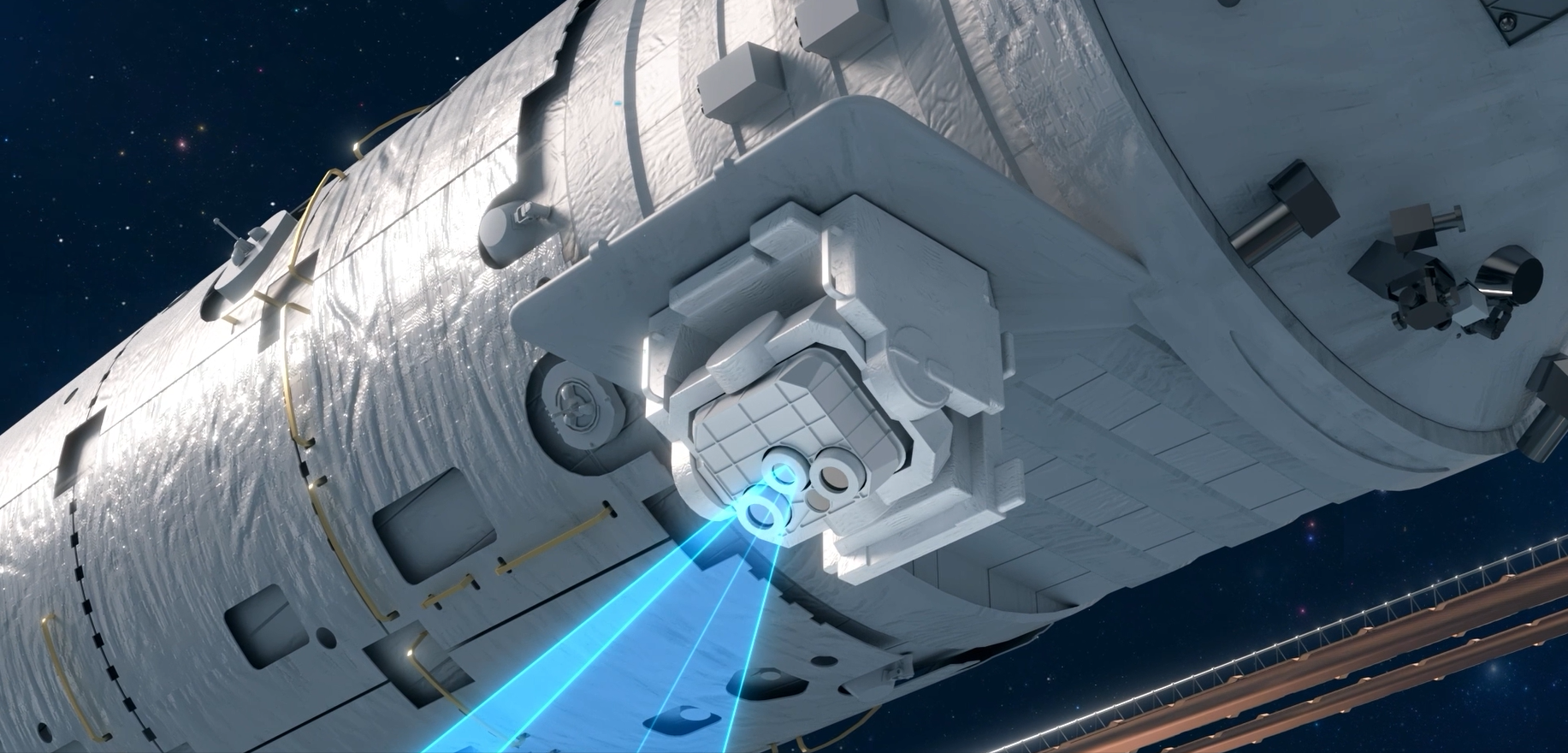
MUSICO measures and analyzes how sunlight is absorbed and scattered by different gases as it passes through the Earth’s atmosphere and reflects off the surface.
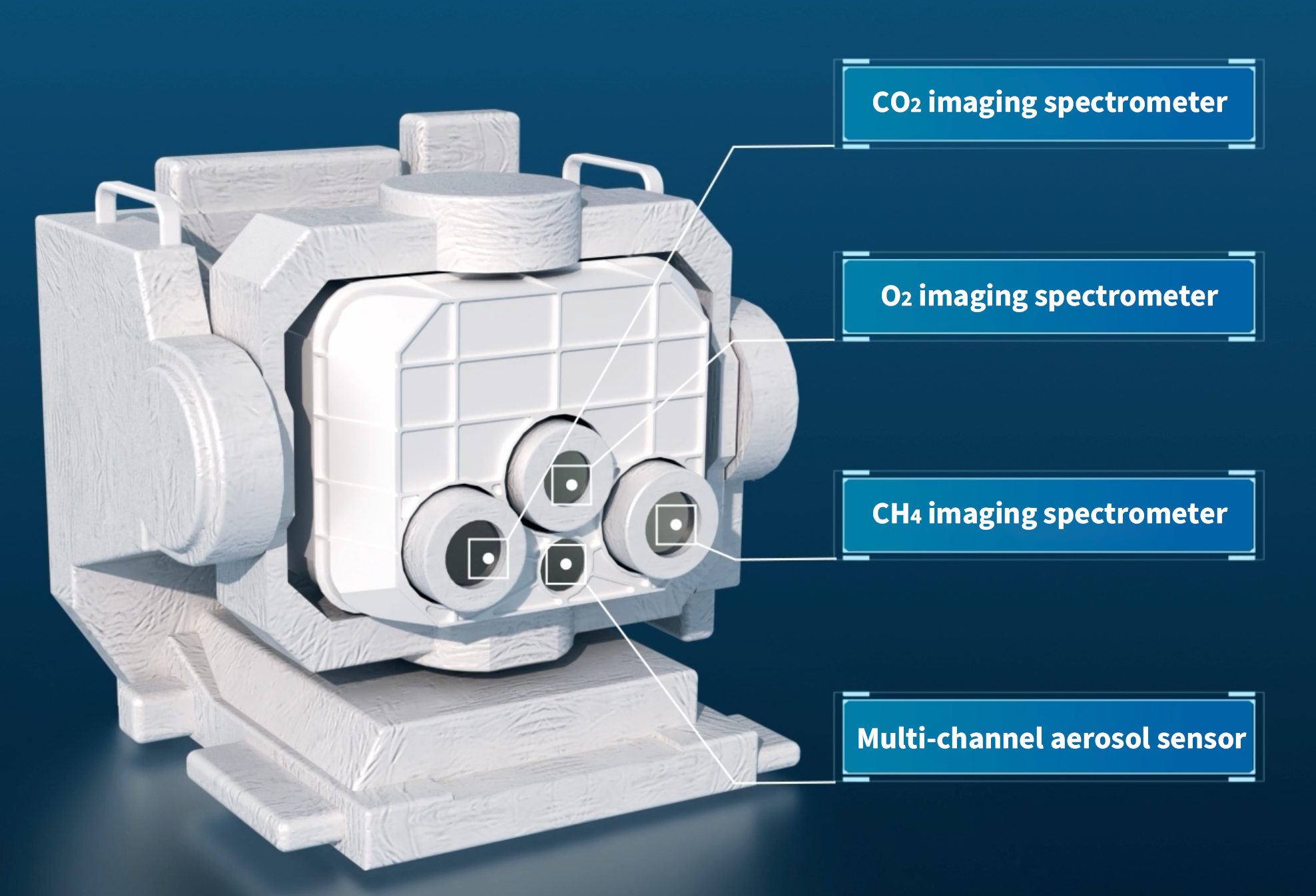
Existing satellite observatories often struggle to balance size with image resolution whilst maintaining a capacity for simultaneous multi-parameter observation. MUSICO stands as a cutting-edge solution. Likened to a “space camera”, it features four advanced optical lenses working in parallel to detect CO₂, CH₄, oxygen (O₂), and aerosols. While CO₂ and CH₄ are the two main greenhouse gases driving global warming, the recording of O₂ and aerosols provides reference measures to enhance the accuracy of CO₂ and CH₄ data.
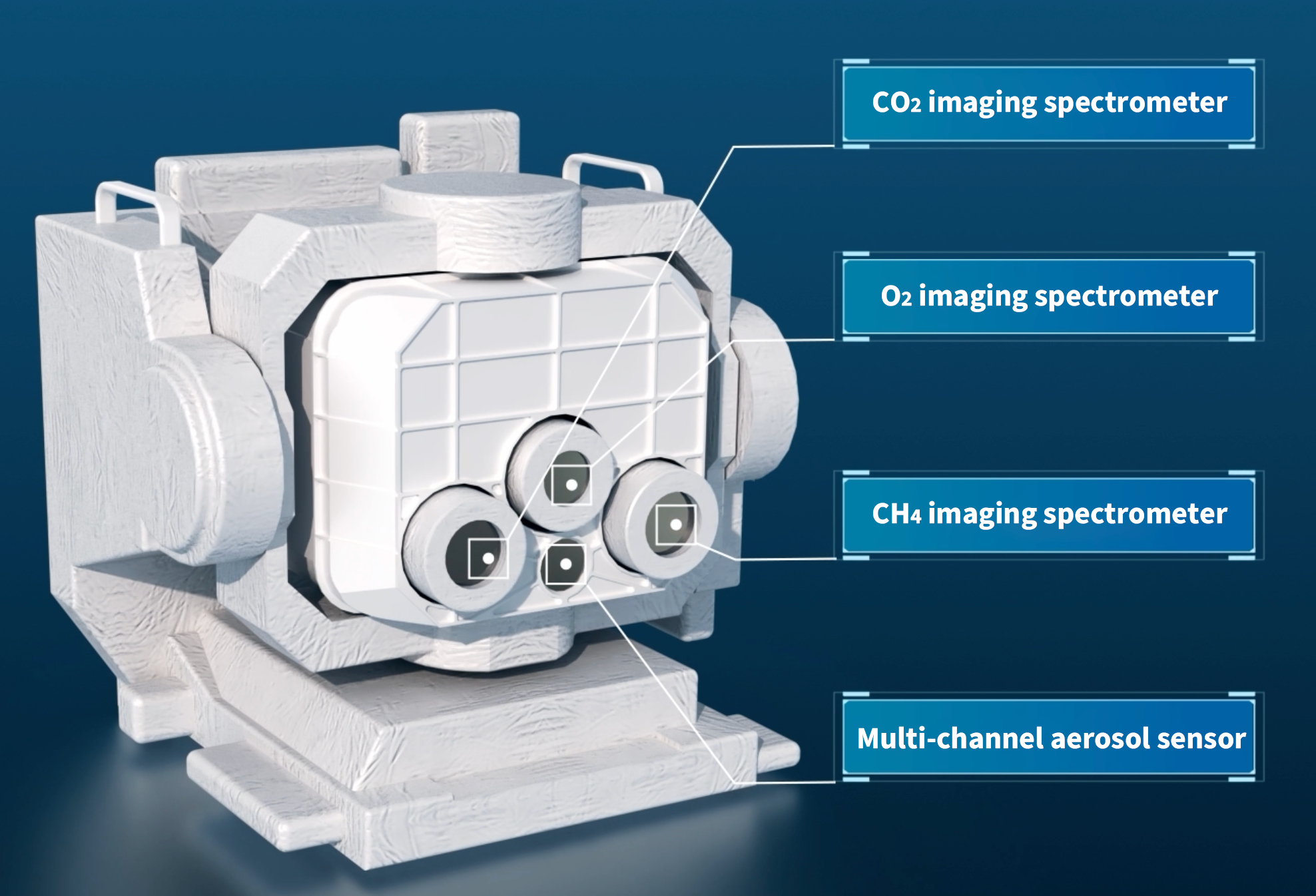
Equipped with four advanced optical lenses, MUSICO is the first-of-its-kind instrument to detect CO₂, CH₄, O₂, and aerosols concurrently from space.
All these lenses and sensors are housed in a structure measuring just 60cm in length, 50cm in width, and 60cm in height, smaller than a domestic washing machine. A total weight of under 80kg classifies MUSICO as a lightweight space payload.
Such a compact design was tailored to address the spaceship’s load limitations. Considering Tianzhou-10 was to carry 700kg of propellant plus 6.2 tons of various materials, the team recognized that slimming by every gram mattered.
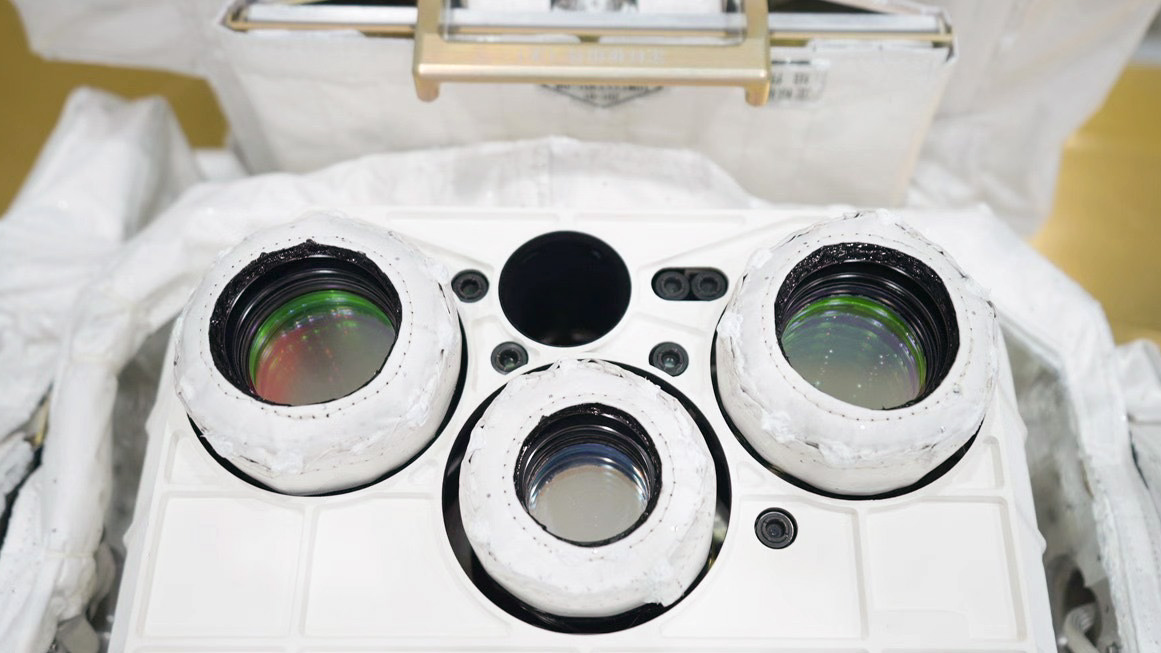
A lightweight space payload, MUSICO weighs less than 80kg and is smaller than a regular household washing machine.
“One major challenge we encountered was to achieve high spectral and spatial resolution, and synergistic multi-gas observation under such strict size and weight constraints,” Prof. Hui Su shares.
“Furthermore, the space station orbits Earth at 7.7km per second—about 100 times faster than a high-speed train on the ground. Operating at such a velocity makes it immensely difficult to capture clear and sharp images.”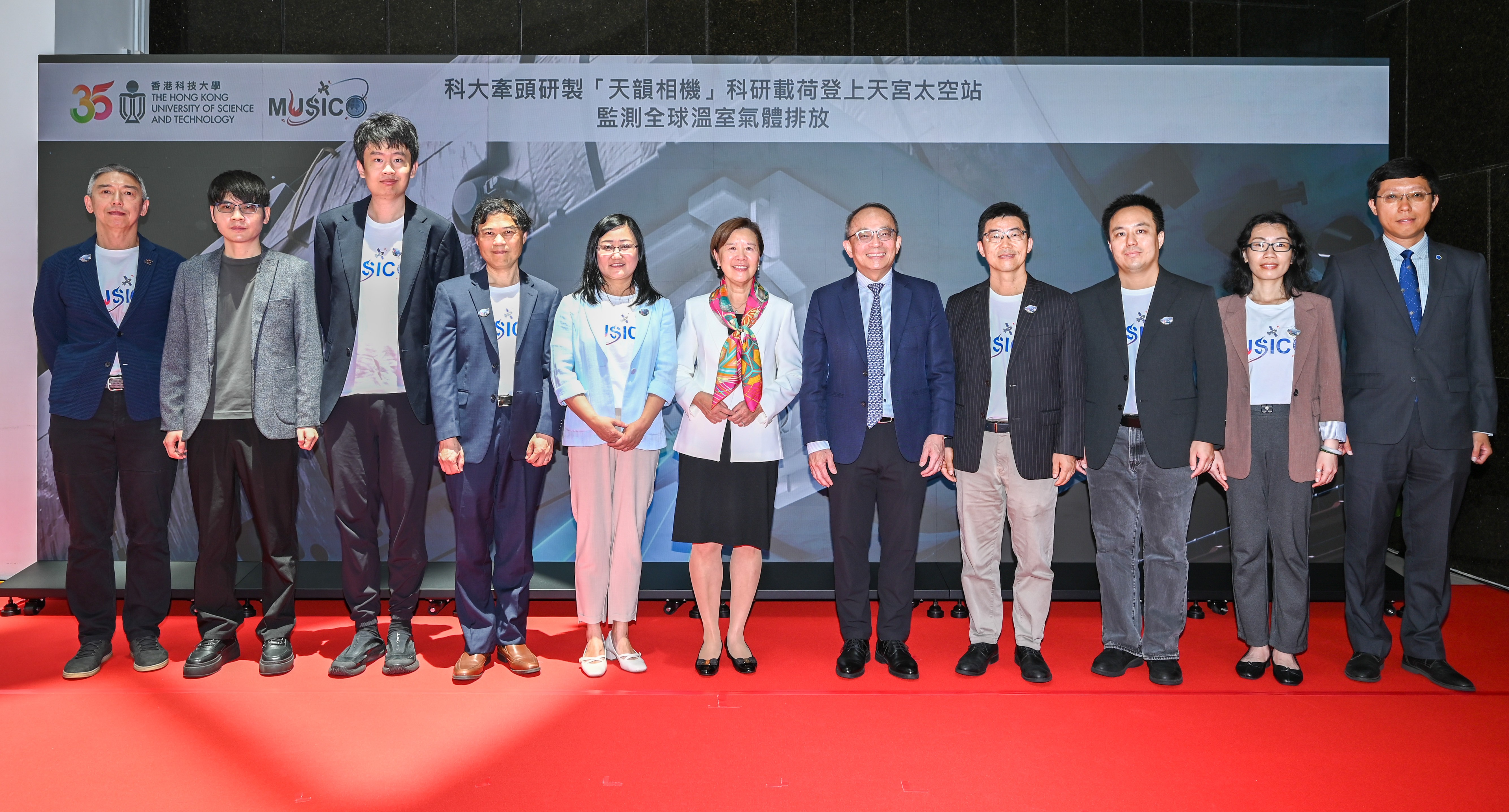
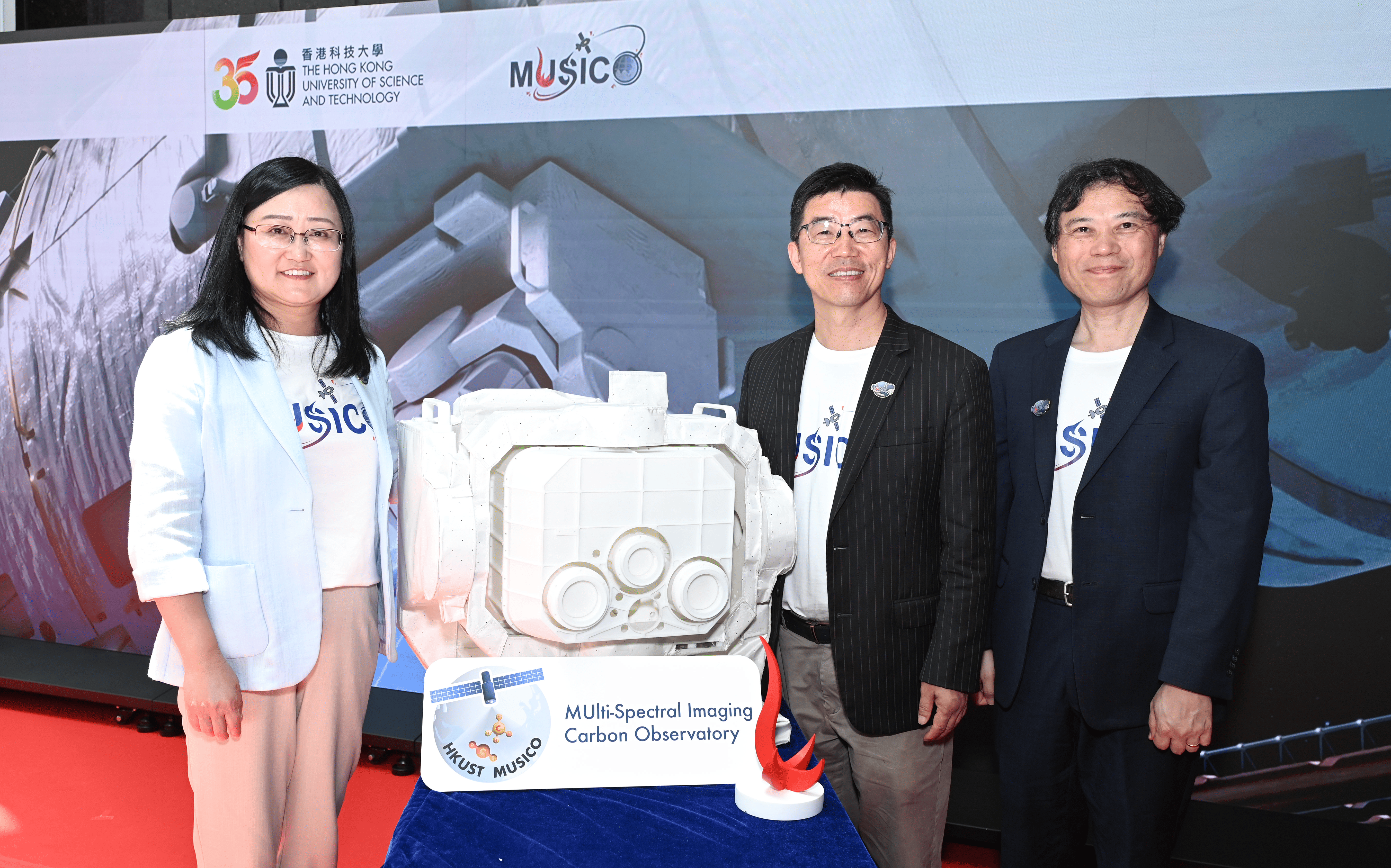
Prof. Nancy Ip (center) says HKUST is deeply honored to participate in scientific missions on the national space station, as she speaks at the press conference that unveils MUSICO.
To overcome this, her team collaborated with the Changchun Institute of Optics, Fine Mechanics and Physics to create a high-precision steerable platform that enables MUSICO to perform extremely stable tracking. As a result, the observatory has achieved an internationally advanced spectral resolution of approximately 0.2 nanometers, alongside a spatial resolution of 100 meters.
“This level of fineness allows our instrument to zoom in on specific emission sources, such as individual power plants, coal mines, and landfills, rather than merely obtaining broad regional averages,” Prof. Su notes.
Nation’s stride, Hong Kong’s pride
Conceived in late 2023 during a visit to our university by a China Manned Space Agency delegation, MUSICO progressed from conceptualization to launch, in just two years, thanks to seamless cross-border partnership: the HKUST team curated the scientific framework using their expertise in hyperspectral gas detection; the Changchun Institute of Optics, Fine Mechanics and Physics contributed their advanced manufacturing prowess to construct the hardware; and the Technology and Engineering Center for Space Utilization under the Chinese Academy of Sciences coordinated execution as the project manager.
The synergy highlights Hong Kong SAR’s increasingly active role in China’s aerospace explorations, as pointed out by project co-lead Prof. Limin Zhang.
“This marks the first time for a Hong Kong research team to take the lead in an aerospace study. The MUSICO project has set a milestone demonstrating our capability to contribute more,” he remarks.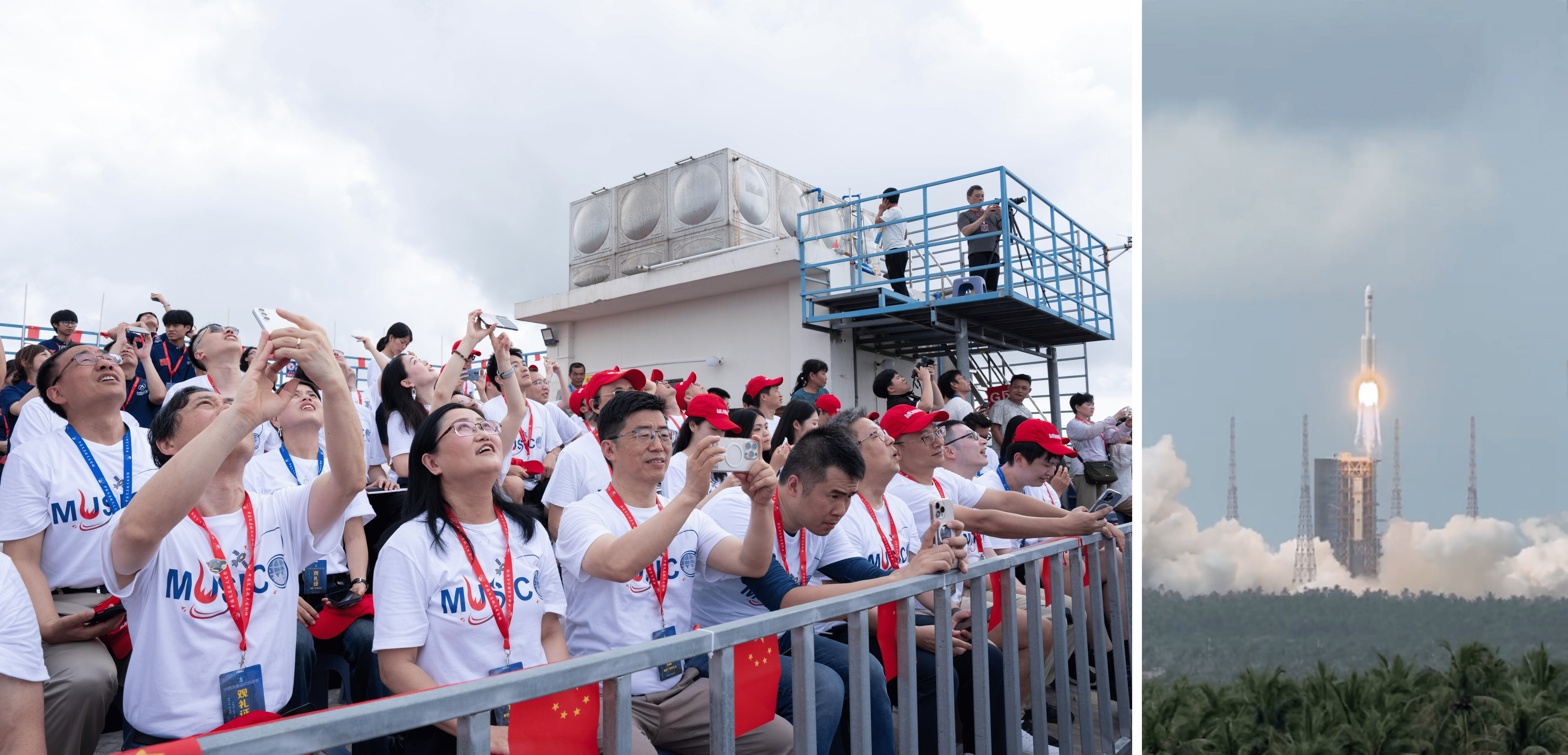
On May 11, 2026, the team gathered in Wenchang, Hainan, to witness a landmark moment. Among a contingent of 70 faculty members, students, and alumni of the university, they watched the spectacular blast-off of the Long March 7 rocket carrying the Tianzhou-10 spacecraft, where MUSICO was nestled.
Adding to the local pride, the observatory was subsequently operated by Dr. LAI Ka-Ying, Hong Kong’s first-ever payload specialist, during her mission aboard the space station. A dedicated dashboard will track its whereabouts, allowing viewers on the ground to watch the real-time locations of both MUSICO and HKUST-FYBB#1, the high-resolution optical satellite launched by the university in 2023.
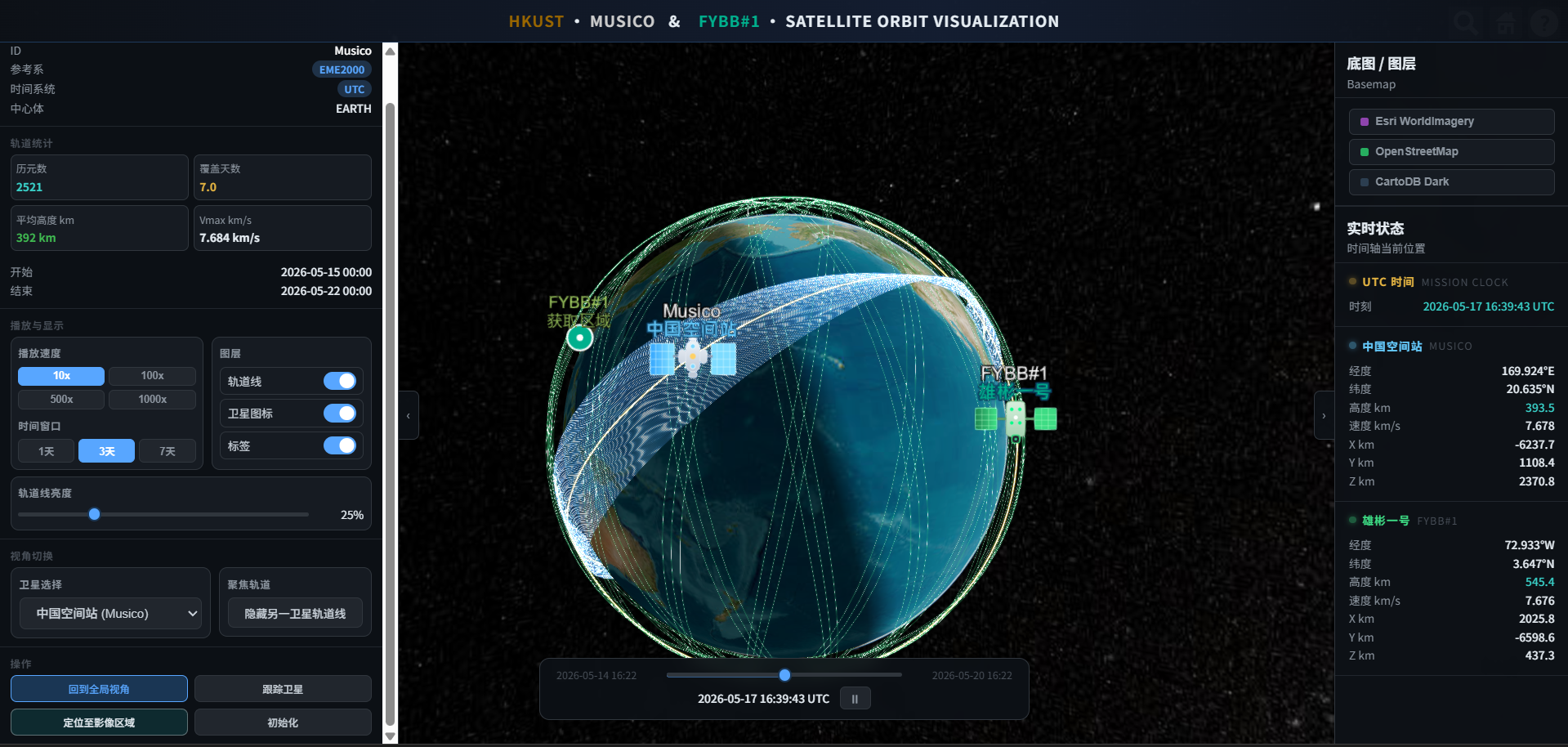
Advancing climate governance
Yet MUSICO’s journey into space is just the start of another important stage. As it transmits data back to Earth, the HKUST team will analyze the results and share them with government agencies and scientific institutions for research and applications nationwide.
Prof. Limin Zhang is confident that the findings will provide a robust basis for emission reduction efforts. “This is both a vivid example of HKUST’s research strength serving national strategy and a concrete practice of Hong Kong’s capabilities contributing to global climate governance,” he comments.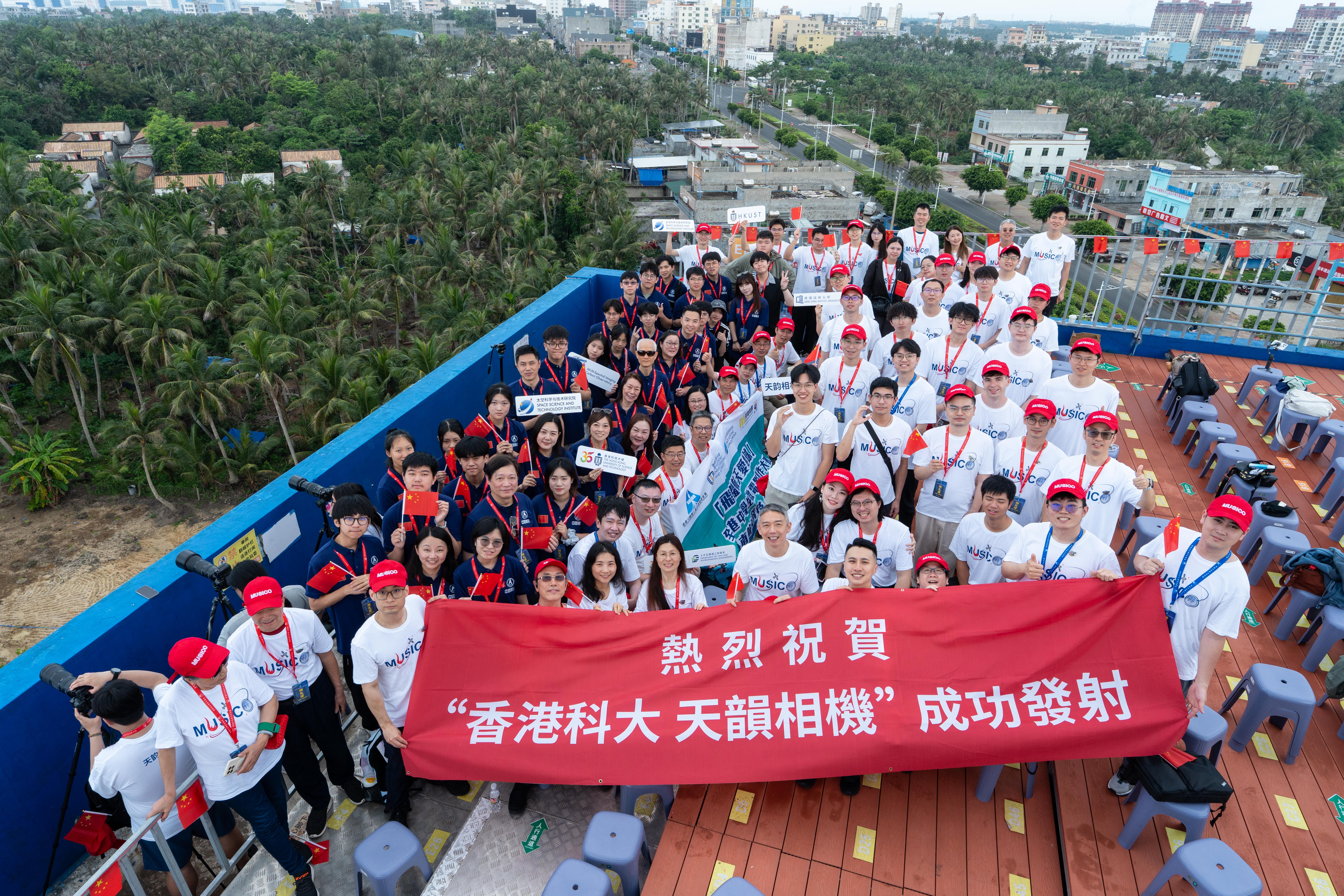
Seventy members of the HKUST community and 38 high school students from Hong Kong celebrate the launch of MUSICO as they watch the liftoff of the Long March 7 rocket in Wenchang, Hainan.
Making rocket science less rocket science
Closer to home, the launch of this pioneering payload is hailed as a propeller for Hong Kong’s space science. Along with the historic space journey by Hong Kong’s first spacewoman, it has drawn extensive media coverage and sparked a citywide fever. At the Hong Kong Space Museum, an enthusiastic audience recently attended Prof. Su’s captivating public lecture to demystify MUSICO's science, transforming intimidating “rocket science” into something wonderfully accessible for all curious minds.
Looking ahead, the team envisions even broader applications of their brainchild. “While the necessity to minimize the payload’s size and weight initially came as a challenge, it has inadvertently paved the way for commercialization, as a lighter instrument translates to lower launch costs and higher feasibility for mass production,” Prof. Hui Su explains.
“In the long run, we look forward to building a fleet of MUSICO devices to establish a comprehensive orbital network of observatories, allowing us to monitor Earth’s greenhouse gas emissions on an unprecedented scale.”